Base Isolators
Laminated rubber and steel bearings with steel flange plates. Ninety percent of our isolators feature an energy-dissipating lead core for high damping.
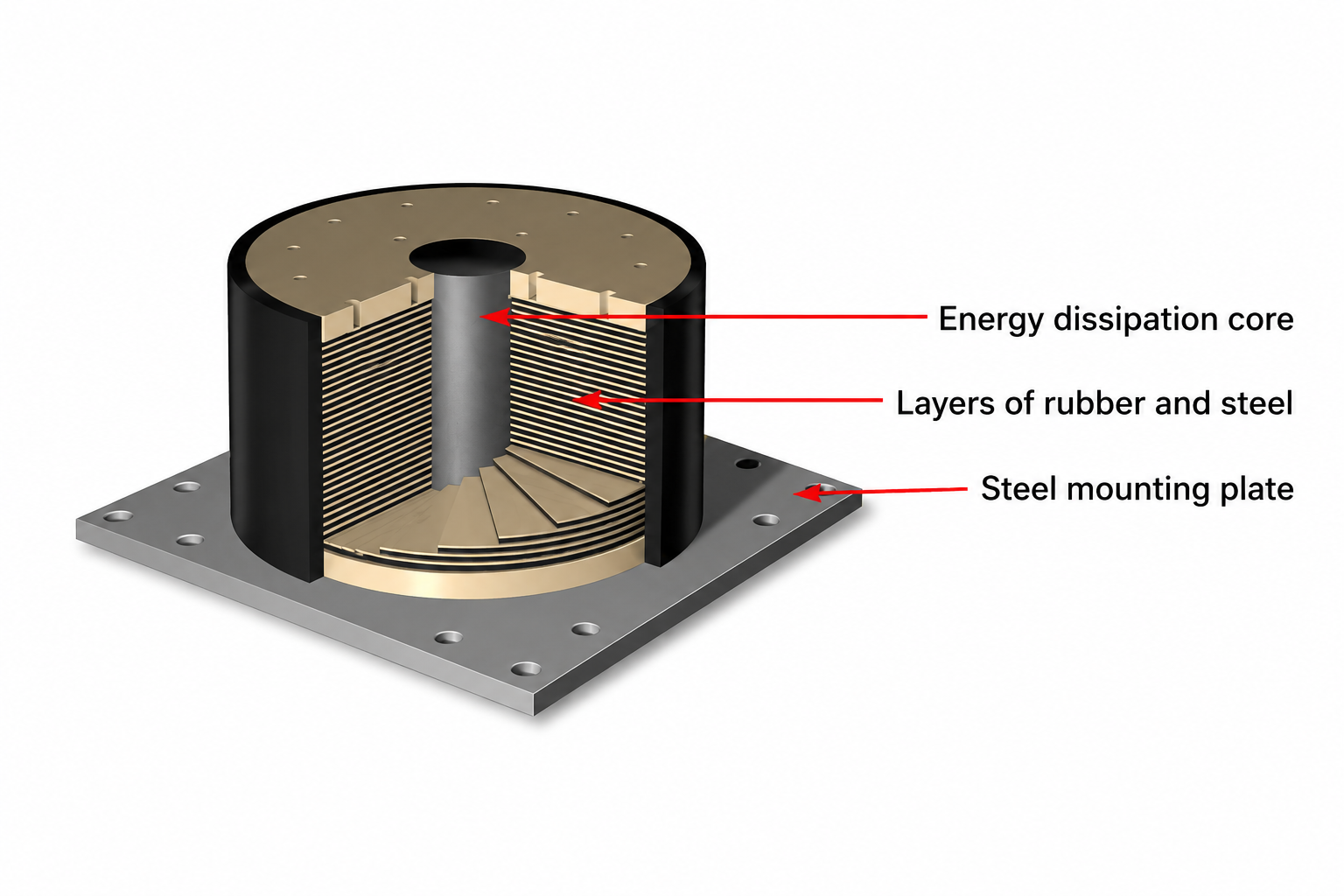
Base isolators consist of a laminated rubber and steel bearing with steel flange plates for mounting to the structure. Ninety percent of our isolators have an energy-dissipating lead core.
The rubber acts as a spring, very soft laterally, very stiff vertically. The high vertical stiffness comes from thin layers of rubber reinforced by steel shims. These two characteristics allow the isolator to move laterally with low stiffness while carrying significant axial load. The lead core provides damping by deforming plastically when the isolator moves laterally in an earthquake.
Isolators from 12 to 60 inches in diameter, with capacities up to 4,000 tons, are manufactured. Custom dimensions are available for special applications. Shims are laser-cut to exacting tolerances; steel mounting plates are machined by computer-controlled milling centers. Each bearing's curing phase is continuously monitored to ensure the rubber is uniformly cured throughout.
Modeling parameters
A lead rubber bearing is modeled as a bilinear hysteretic element with initial stiffness Ke, yield force Fy, and secondary stiffness K2/Kd. For response-spectrum analysis use the effective stiffness Keff and equivalent viscous damping derived from the isolator's EDC. For time-history use Ke, Fy, K2 plus the vertical stiffness Kv. Elastomeric isolators are ~100× stiffer in compression than tension, model the vertical stiffness carefully.
Testing
Tested in pairs at our plant and individually at labs such as UCSD. Routine large-strain tests reach 400% shear strain. Real-time tests apply earthquake velocities up to 60 in/s on isolators up to 53.5" (1300 mm) in diameter, more than 500 high-velocity tests over the past decade.
Design life
Normal design life is over 50 years. Elastomeric pads in highway bridges have been in service for over four decades. Modern rubber formulations under a protective cover are expected to be more durable still.
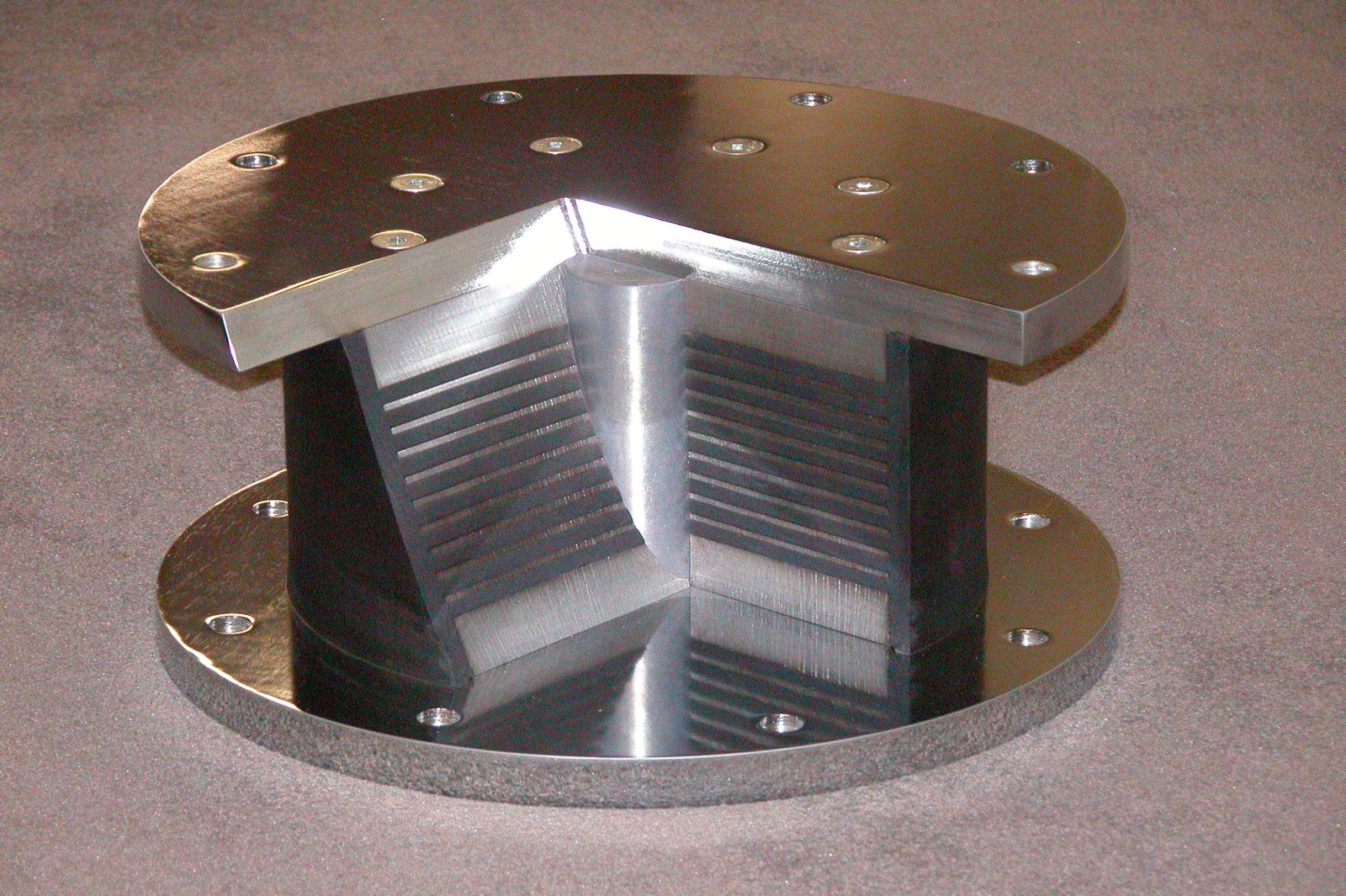
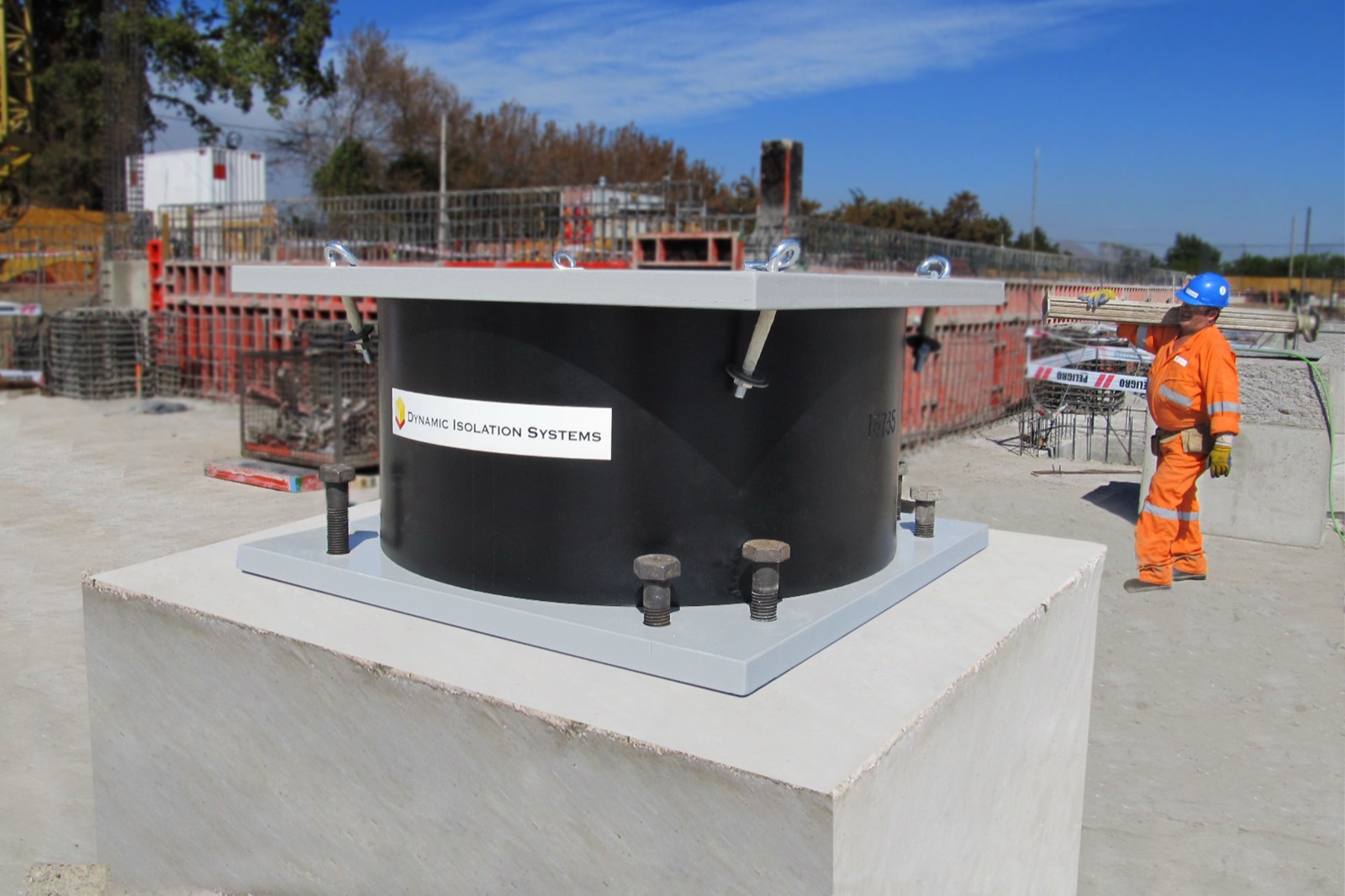
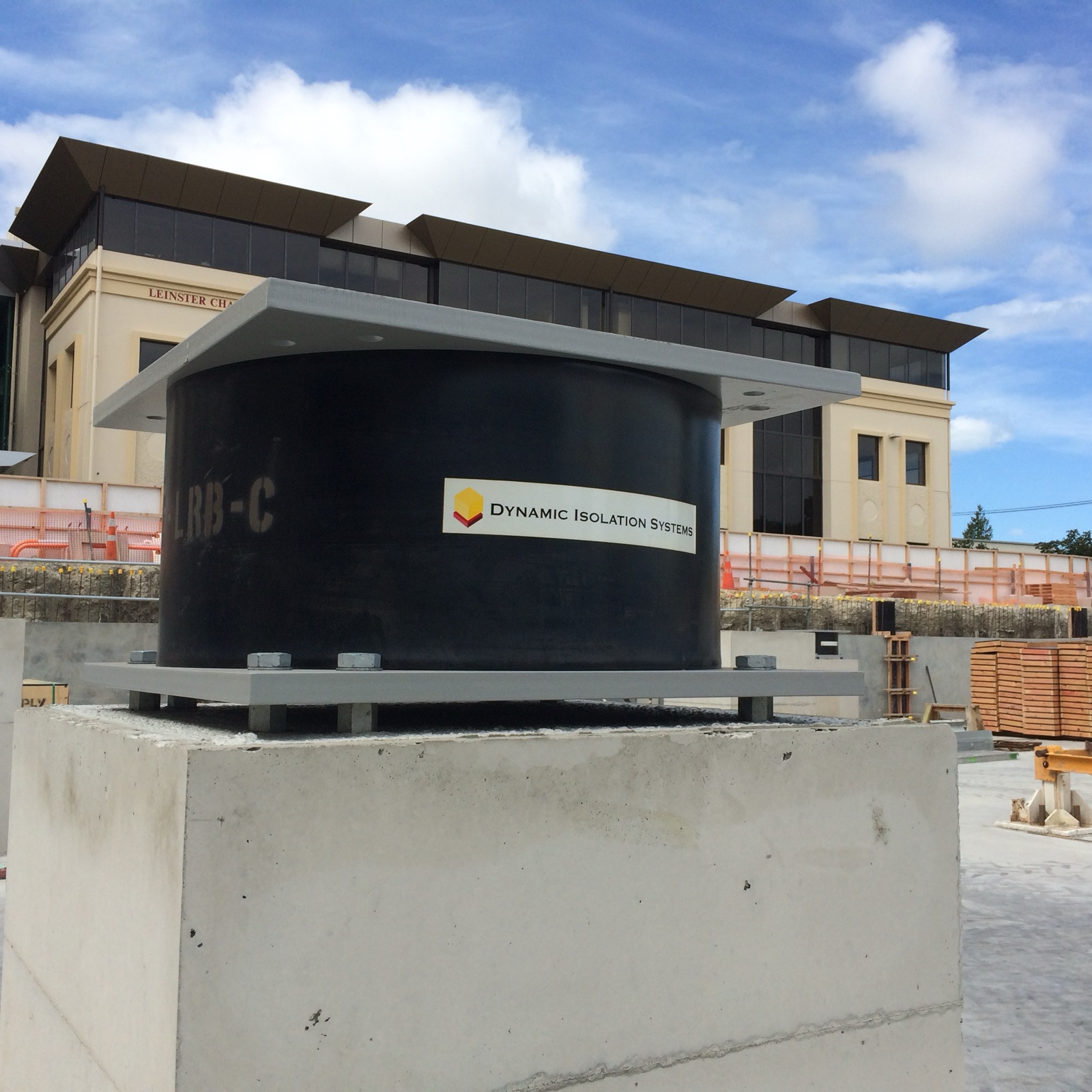
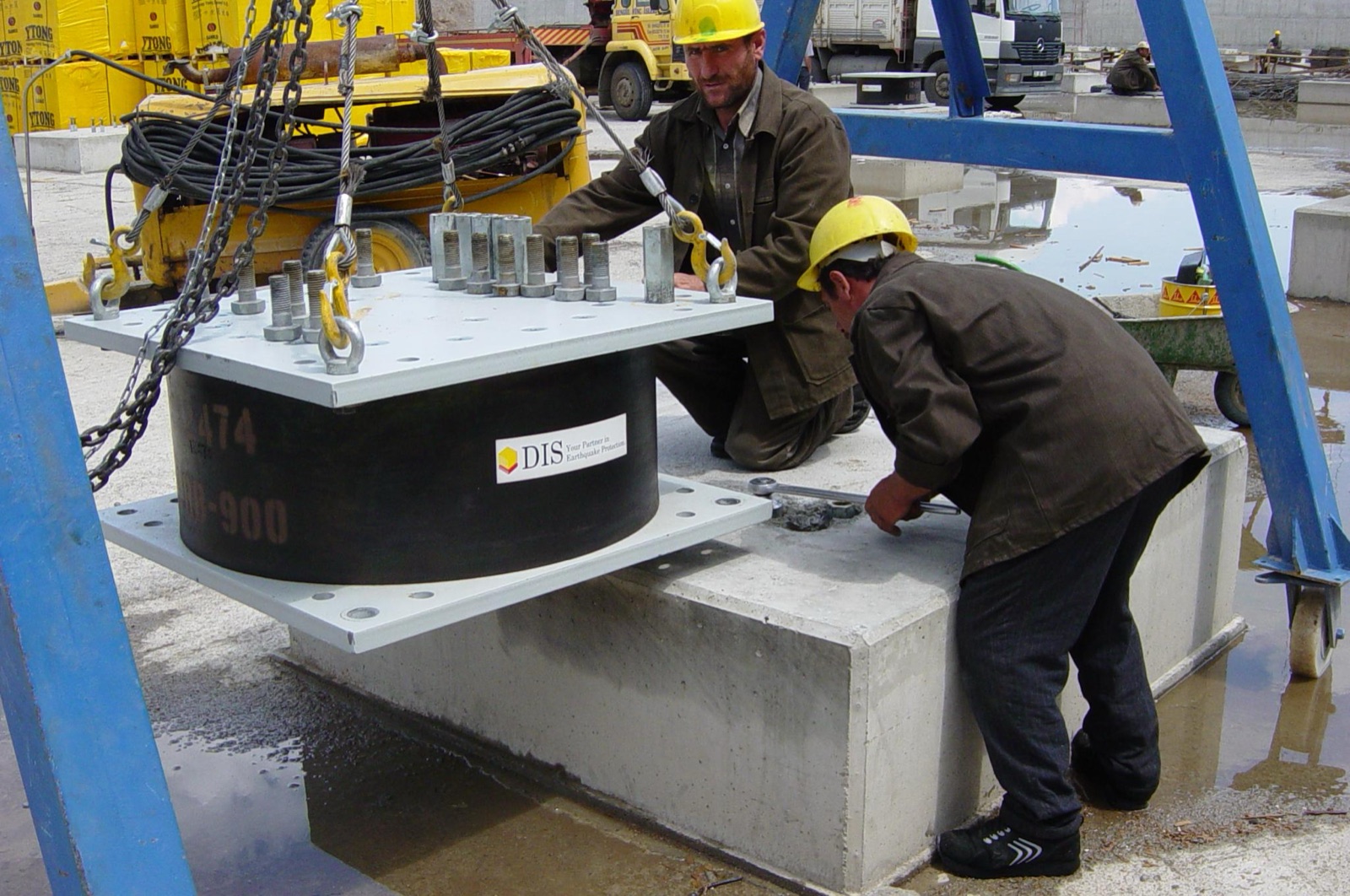
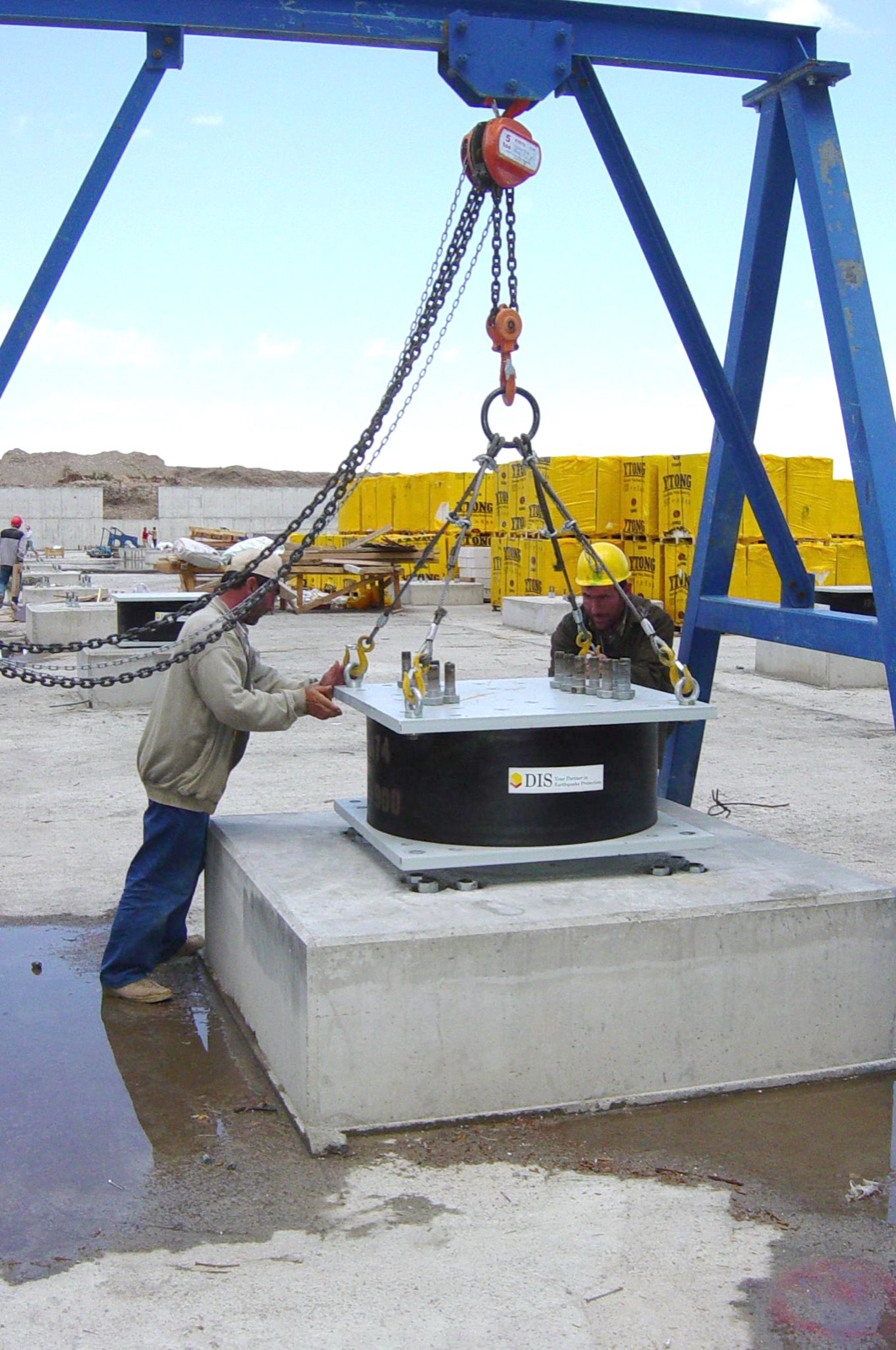
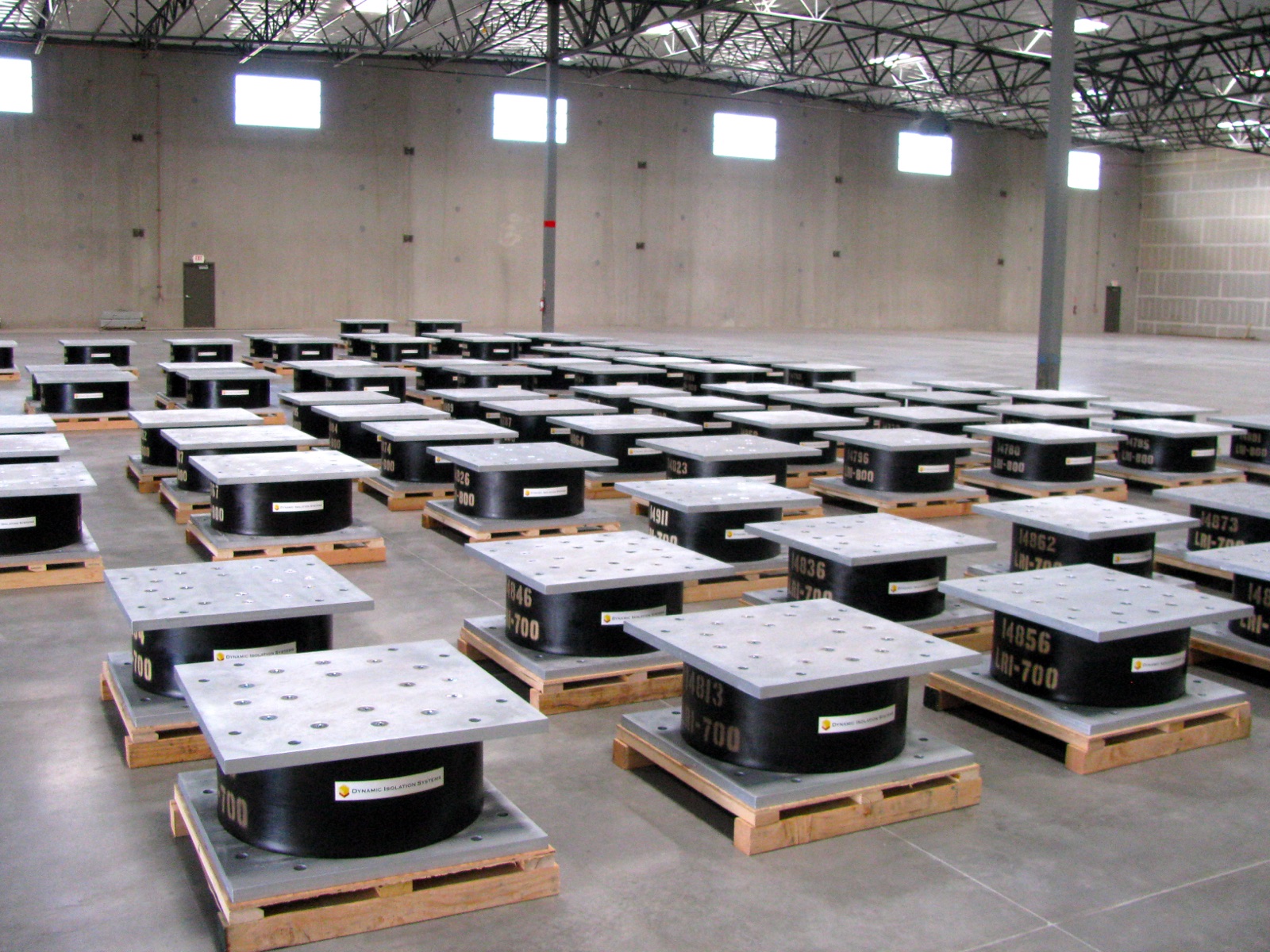
Lead rubber bearing cutaway showing the laminated rubber, steel shims and lead core
Other products
Sliding Isolators
A PTFE (Teflon) disc sliding on stainless steel. Used alongside LRBs to tune the response of an isolation system and handle rotations.
Viscous Wall Dampers
A steel tank, an inner vane and a high-viscosity fluid reduce inter-story drift by more than 50%. Compact, maintenance-free, and architecturally flexible.
Non-Structural Isolation
Protects equipment and content when isolating the whole building isn't practical. 2D systems handle horizontal accelerations using spring units, sliders and rollers. 3D systems add vertical isolation, X, Y and Z, for high-spectrum equipment.
Got a project where downtime isn't an option?
Our engineers work alongside you from concept through installation. When we're brought in during the design phase, total project cost often drops by up to 30%.