Non-Structural Isolation
Protects equipment and content when isolating the whole building isn't practical. 2D systems handle horizontal accelerations using spring units, sliders and rollers. 3D systems add vertical isolation, X, Y and Z, for high-spectrum equipment.
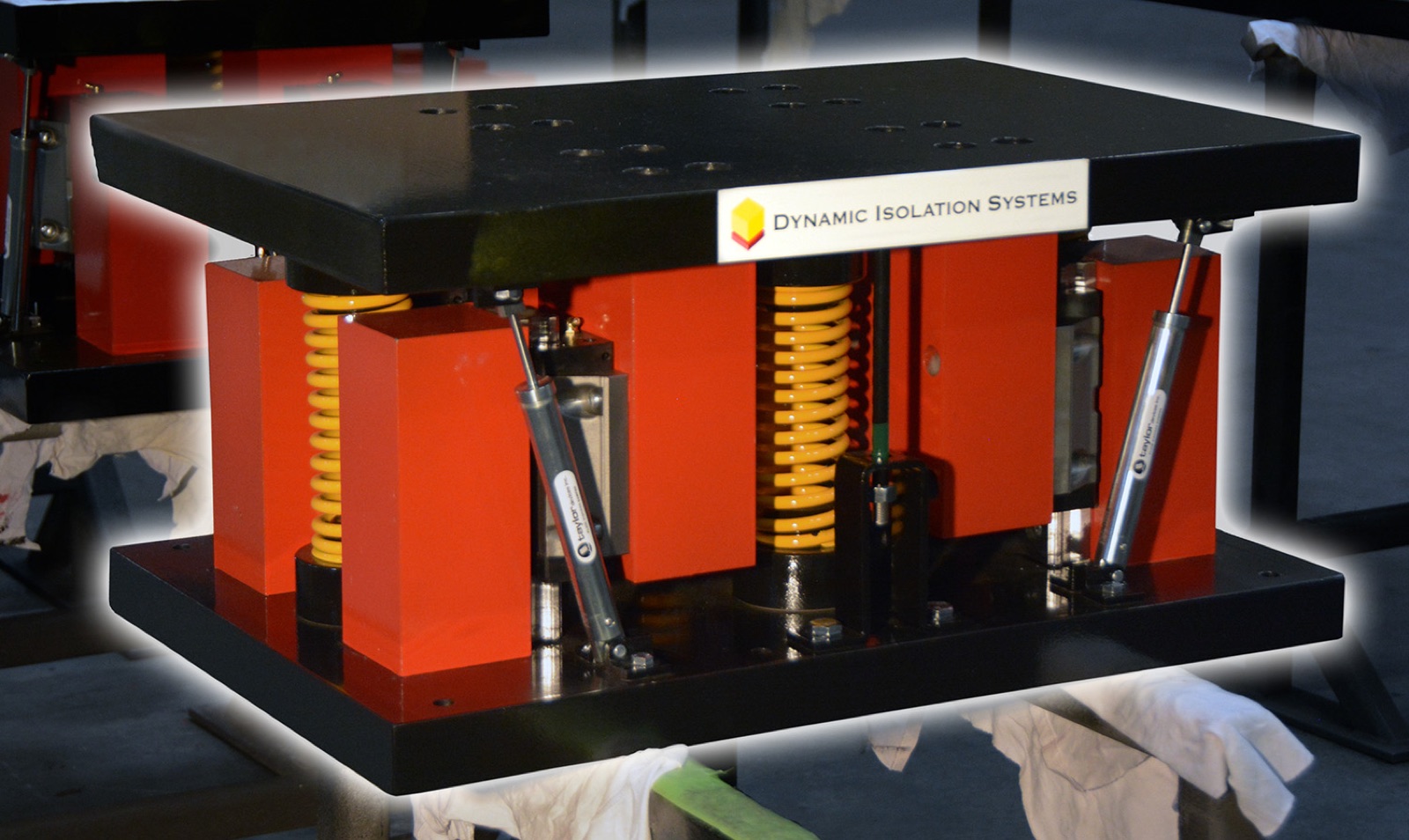
When isolating the whole building isn't practical, we isolate what's inside it. DIS makes two families of non-structural isolation: 2D systems that protect against horizontal accelerations, and 3D systems that add vertical isolation as well. Both use DIS Multidirectional Spring Units, sliders and rollers tuned to the project's ground motion.
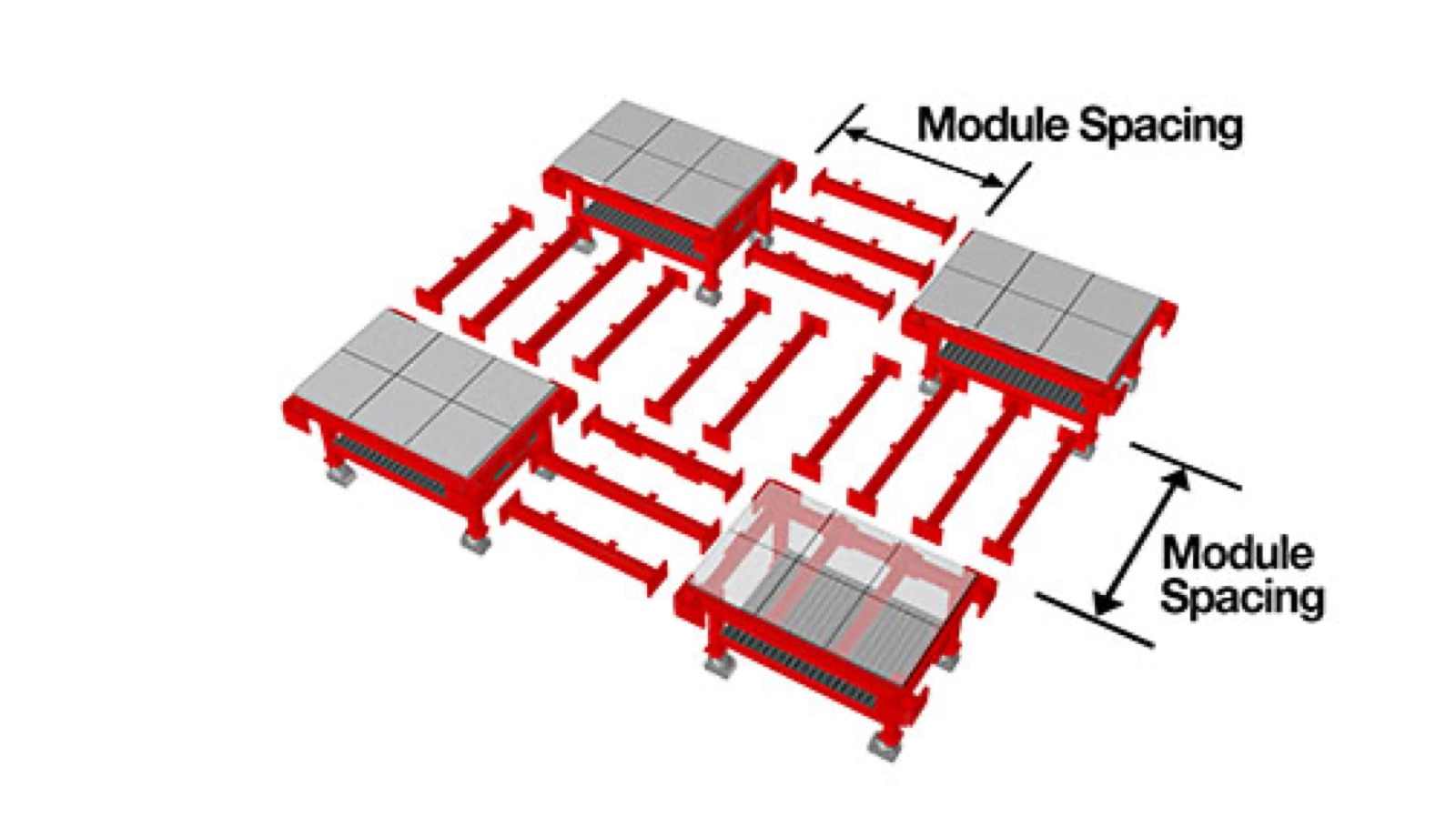
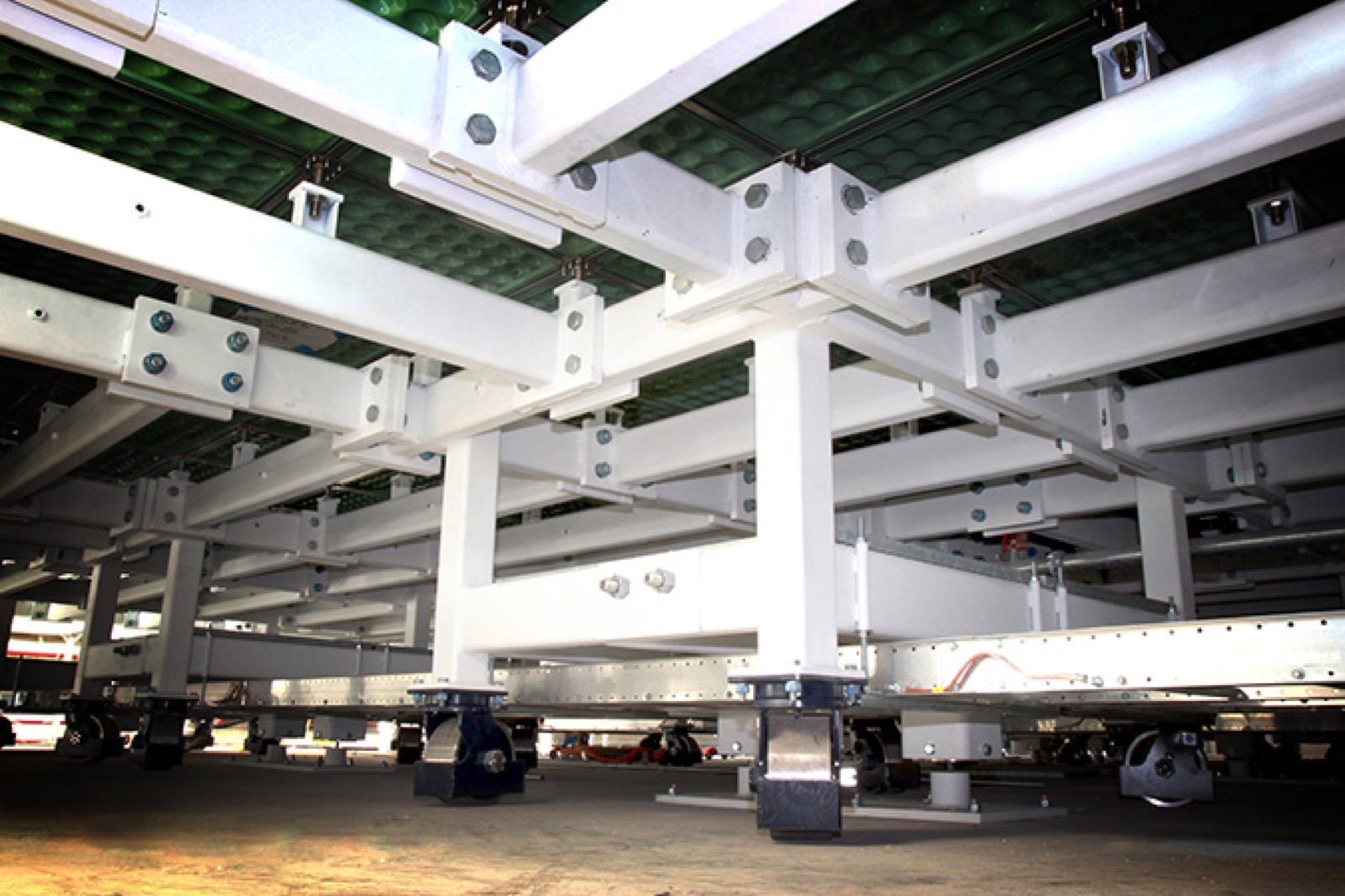
**2D systems, low-mass and floor isolation.** Spring stiffnesses range 2 to 50 pounds per inch, far softer than the 5,000 to 30,000 lbs/in typical of building and bridge isolators. The low stiffness lets us isolate lighter structures and equipment in the 0.5- to 50-ton range. Horizontal accelerations drop by more than a factor of three. For floor systems, accelerations and spectral accelerations are reduced by up to a factor of seven, with floor displacements as large as 18 inches relative to the structure beneath. Floor heights run from 13 to 24 inches, with the 24-inch deck a direct substitute for conventional raised computer flooring.
**3D systems, vertical plus horizontal.** Seismic isolation is traditionally engineered to protect against horizontal shaking, but in some applications vertical accelerations matter just as much. We were approached by the engineers of a major hydro-electric dam to protect operational equipment sitting on top of the structure, designed to IEEE 693 high-performance spectra. DIS engineers built a system that isolates in X, Y and Z. The spectral accelerations were reduced by a factor of 18, far beyond the project's design requirement.
Over 200 shake-table tests at DBE and MCE levels were performed at UNR and SUNY Buffalo, including SAC motions with peak inputs up to 3g and floor-system tests at 6g. Across the test program, the 2D and 3D platforms held displacements and accelerations within design even under the most demanding inputs.
Where 2D systems fit
Data centers, emergency command centers, server racks, medical equipment, semiconductor and high-tech manufacturing equipment, artwork, vaccines and high-value medicines, prefabricated and modular buildings.
Where 3D systems fit
Equipment with significant vertical demand, hydro-electric and dam-top equipment, IEEE 693 substation gear, sensitive scientific instruments, anything where the design spectrum has meaningful vertical content.
Don't pair with base isolation
Both an isolated floor and base isolation lengthen the natural period. Their similar frequencies can resonate and produce worse performance than either system alone. Use one or the other, not both.
Engineering per site
Every project is engineered for the ground motion at the location, and for in-building installations, the floor-level accelerations the equipment will see. Spring rates, sliders and roller geometry are tuned to the spectra.
Displacement and installation
Typical horizontal displacement is 8–24 inches depending on shaking severity. A floor can run continuous to the room's walls with a perimeter closure, or stand alone with an edge closure. Services and wiring run beneath the stringers.
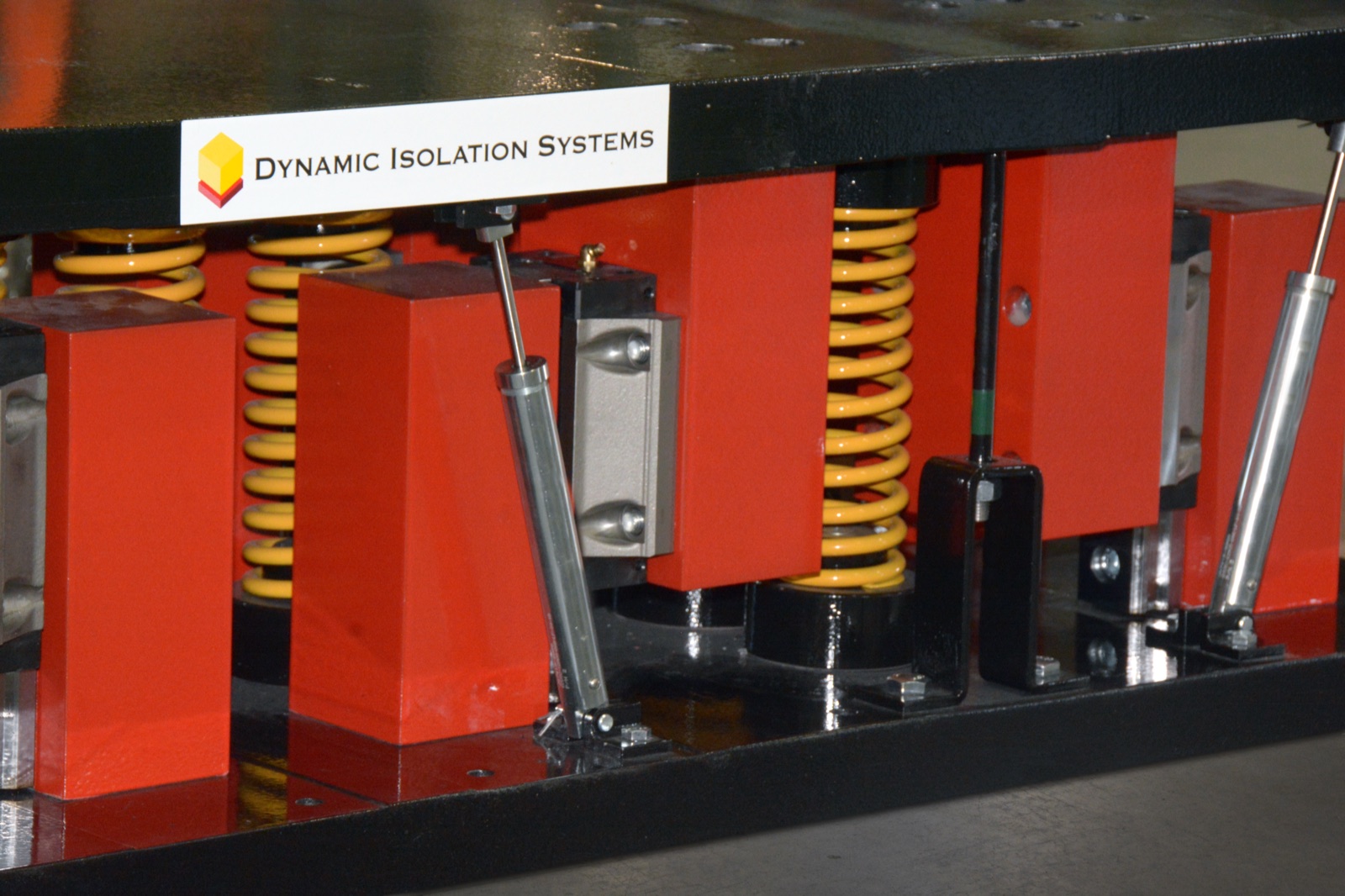
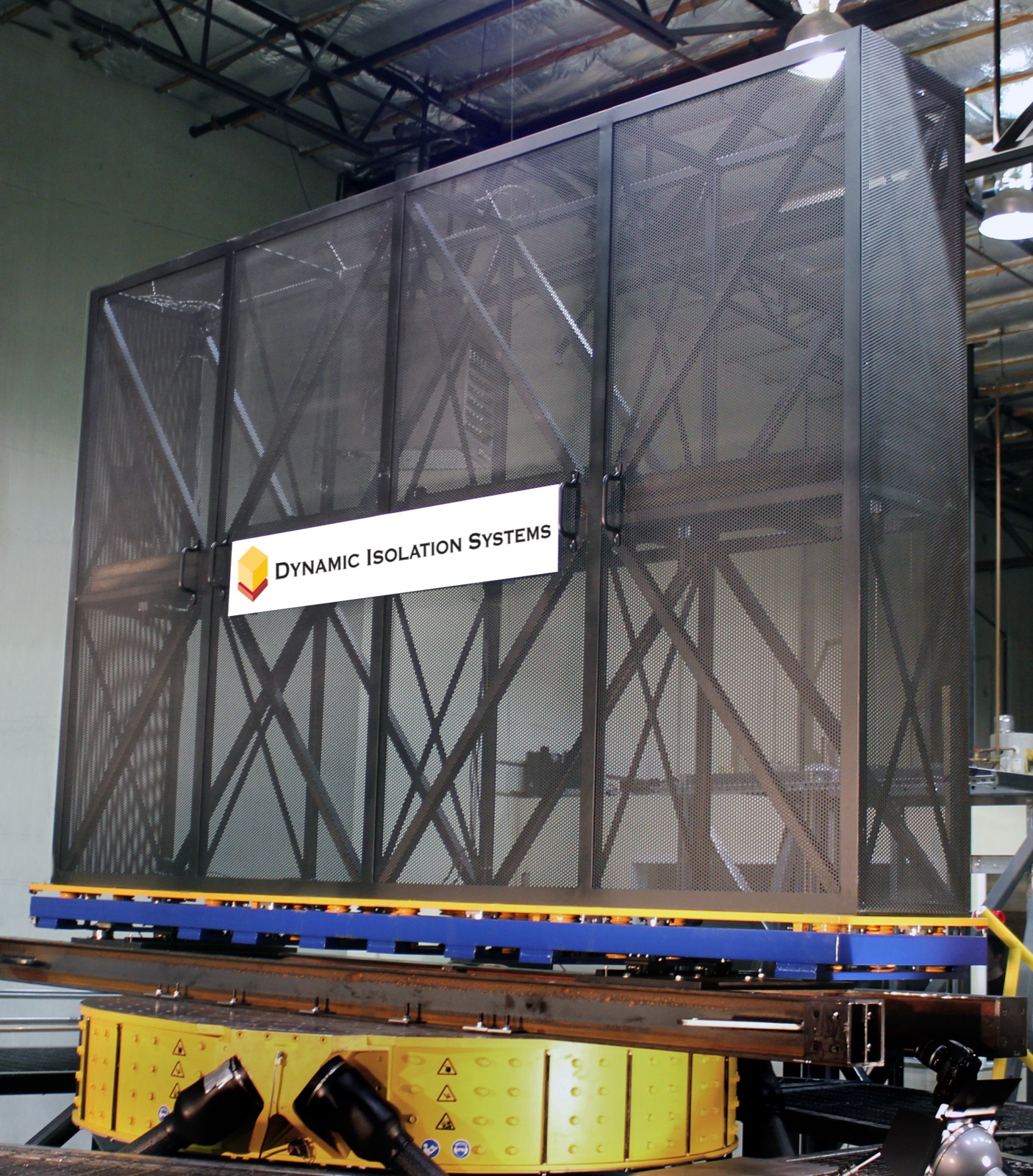
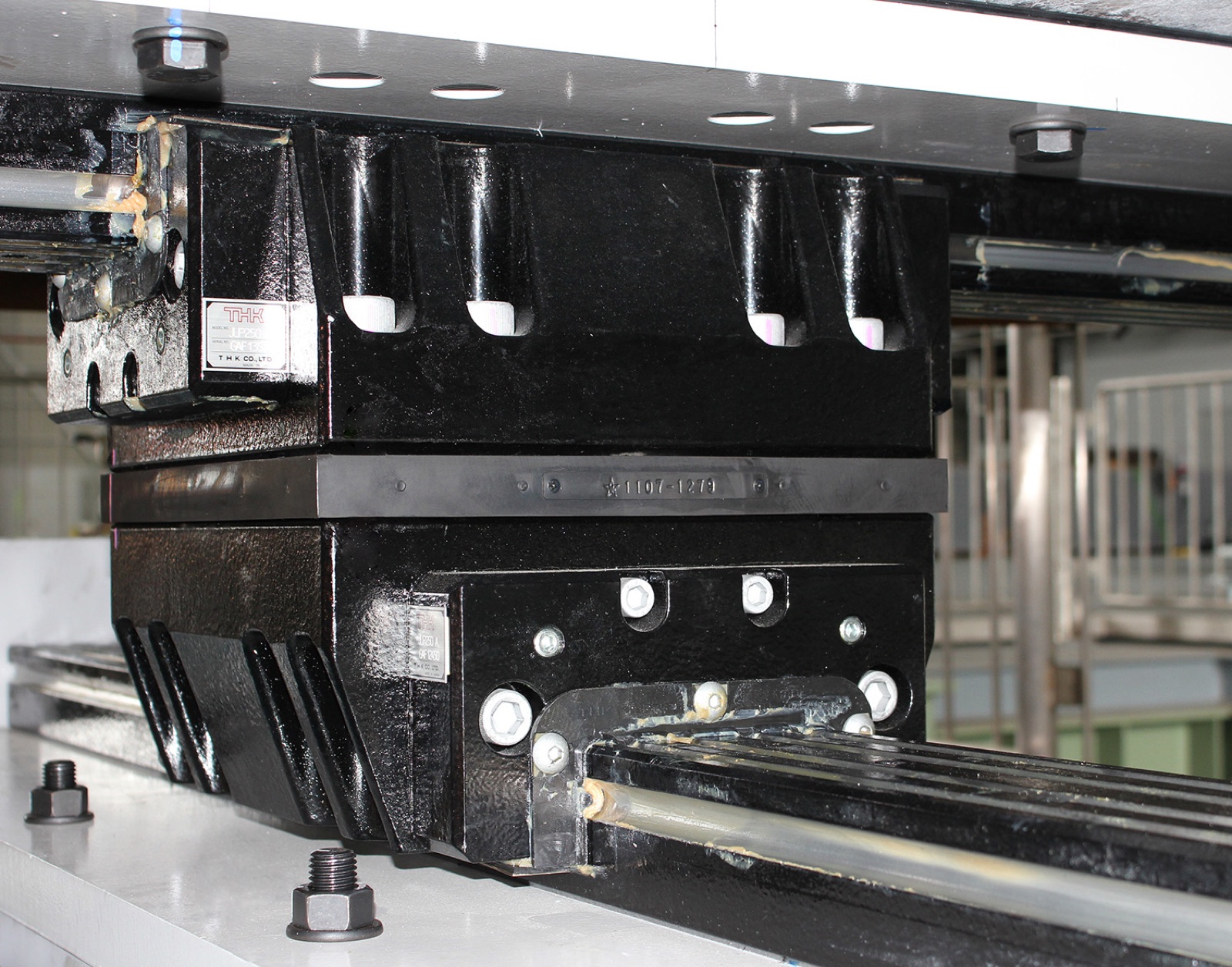
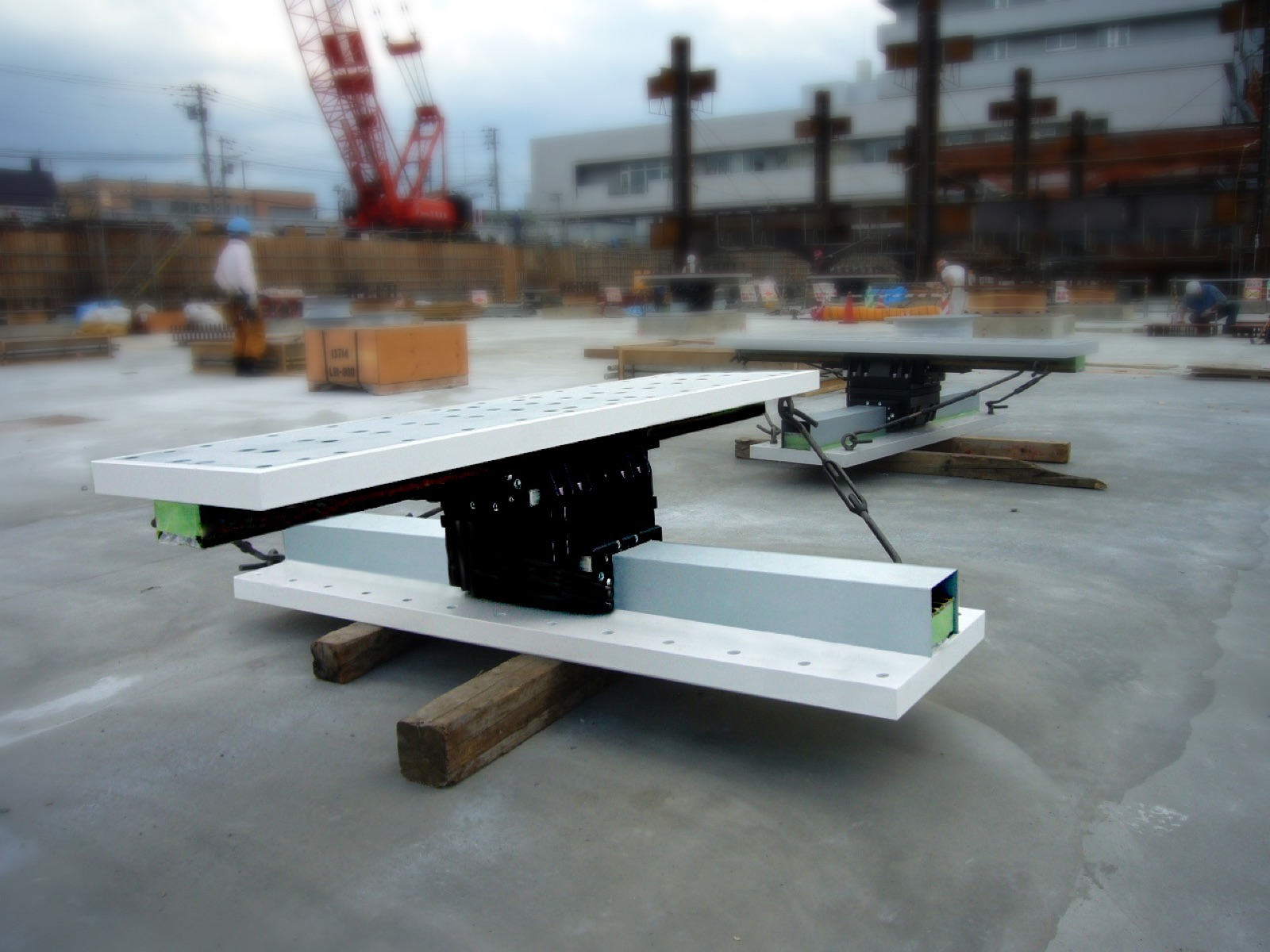


DIS multidirectional spring units for 3D isolation
Other products
Base Isolators
Laminated rubber and steel bearings with steel flange plates. Ninety percent of our isolators feature an energy-dissipating lead core for high damping.
Sliding Isolators
A PTFE (Teflon) disc sliding on stainless steel. Used alongside LRBs to tune the response of an isolation system and handle rotations.
Viscous Wall Dampers
A steel tank, an inner vane and a high-viscosity fluid reduce inter-story drift by more than 50%. Compact, maintenance-free, and architecturally flexible.
Got a project where downtime isn't an option?
Our engineers work alongside you from concept through installation. When we're brought in during the design phase, total project cost often drops by up to 30%.